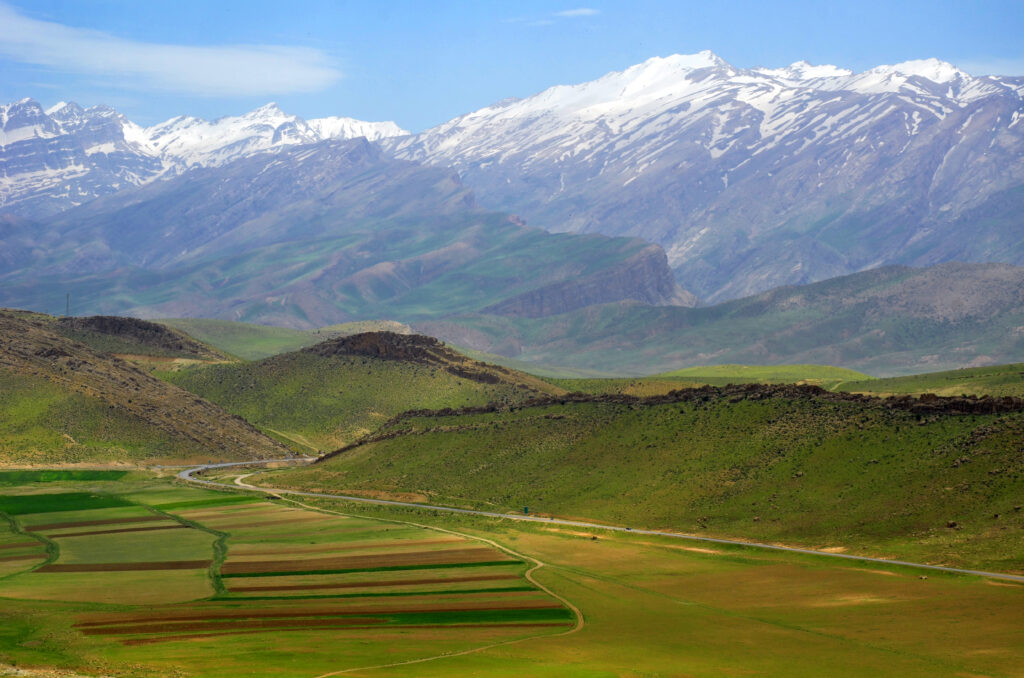
In western Iran, the Zagros Mountains stretch for about 1,500 km, forming a rugged barrier between the Mesopotamian Plain and the Iranian Highland. The landscape is harsh: steep ridges, narrow passes, deep valleys, and many peaks over 4,000 m. Seasonal snow and floodwaters further influence how people move and settle.
From early times, small and scattered communities lived here. Some farmed the valleys, others moved livestock between seasonal pastures. The terrain favored fortified settlements, and local chiefs who could gather armed followers or escape into the hills often held more practical power than distant kings. In this setting a ruler’s grip on power was never secure. Success depended on keeping subordinate chiefs loyal, controlling trade and movement routes, and managing the influence of stronger neighbours.
When empires such as Assyria and Urartu pressed into the region in the late 8th century BCE, smaller kingdoms faced a stark choice: resist (and risk destruction), or submit (and accept outside oversight). But submission did not always mean the end of authority. With the right strategy, it could help preserve it under imperial protection.
One of the most adept rulers in this context was Ullusunu of Mannaea. He shifted between Urartian and Assyrian support at key moments to secure and stabilize his rule. In doing so, he transformed the Zagros’ instability from a liability into an asset.
Continue reading “Ullusunu of Mannaea: king-broker between Assyria and Urartu”